
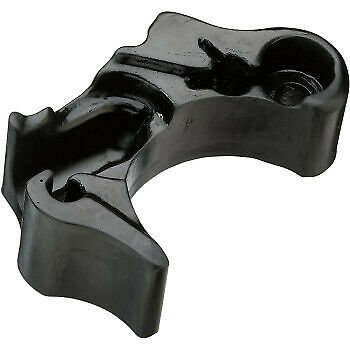
Moose Poly Engine Case Saver – Fits Honda TRX250R (1986‑1988) – Polyurethane Case Protector – Includes Mounting Bolts

Moose Poly Engine Case Saver – Fits Honda TRX250R (1986‑1988) – Polyurethane Case Protector – Includes Mounting Bolts

Moose Poly Engine Case Saver – Fits Honda TRX250R (1986‑1988) – Polyurethane Case Protector – Includes Mounting Bolts
Moose Poly Engine Case Saver – Fits Honda TRX250R (1986‑1988) – Polyurethane Case Protector – Includes Mounting Bolts
⚡ Low Stock — Ships Same Day
OVERVIEW
The Moose Poly Engine Case Saver delivers targeted lower-case protection engineered to absorb impact energy during daily trails or aggressive off-road use. Constructed from resilient polyurethane, this aftermarket shield maintains precise factory geometry to mount cleanly on Honda TRX250R engines without altering chassis clearances.
ENGINEERING & PERFORMANCE
Built from impact-diffusing polyurethane, this protector channels kinetic force away from the aluminum crankcase when drive chains snap or strike embedded trail debris. The flexible compound resists compression set and environmental degradation, preserving consistent coverage across extended service intervals. Designed for direct bolt-on integration, it aligns perfectly with stock mounting points to prevent vibration-induced wear while supporting long-term drivetrain reliability.
KEY FEATURES
- Polyurethane composition for controlled energy absorption
- Engineered to dissipate impact loads away from the crankcase
- Molds directly to the manufacturer engine case profile
- Shield prevents damage from broken drive chains and trail debris
- Resistant construction rated for prolonged outdoor exposure
- Mounting hardware included for immediate installation
- Model-specific bracket alignment matching TRX250R specifications
TECHNICAL SPECIFICATIONS
- Brand: Moose
- Part Name: Poly Engine Case Saver
- Component Type: Engine Case Protector
- Material: Polyurethane
- Supported Years: 1986–1988
- Compatible Trims: TRX250R FourTrax
FITMENT
• Honda TRX250R FourTrax (1986–1988)
WHY RIDERS CHOOSE THIS
Off-road riders select this case saver because it interrupts the chain-reaction failure sequence that routinely cracks aluminum cases on aging four-wheelers. The dense polyurethane matrix captures sudden kinetic energy, transferring impact loads safely around the mounting flanges rather than concentrating stress on vulnerable casting thin sections. Its dimensionally accurate contour guarantees rigid stability under hard lateral loading, eliminating rattles or shifted positioning during rut extraction and rock crawling. By maintaining an unbroken barrier over the primary engine housing, it preserves structural integrity and delays costly teardown procedures while keeping the chassis ready for continuous field deployment.
Couldn't load pickup availability
- Family-Owned Powersports Shop Since 2007
- Fast Shipping From Tennessee
- Authorized Dealer for most Powersports major brands
- 10% Off Storewide (Auto Applied at Checkout)
- No Amazon/eBay Knockoffs
- Real Customer Service From Real Riders
🔥 Top Sellers — Carburetor Rebuild Kits
-
Shindy 03‑210 Carburetor Rebuild Kit – Suzuki LT80 QuadSport 1987‑2006 (Made in Japan)
Regular price $23.70 USDRegular price -
Moose Racing Carburetor Rebuild Kit – Honda TRX300 / TRX300FW 1991‑2000
Regular price $38.33 USDRegular price -
Shindy Carburetor Rebuild Kit for Kawasaki Mule 610 / KAF400 / SX (2007‑2019) – Made in Japan – Complete Carb Repair Kit
Regular price $25.60 USDRegular price -
Shindy Carburetor Rebuild Kit 03‑216 – Suzuki Vinson 500 LT‑A / LT‑F (2002–2007) – Made in Japan
Regular price $35.10 USDRegular price


